Automated audit of Valve's official "AI Generated Content Disclosure" section across Steam store pages. Compare AI-disclosed vs verified No-AI titles by review score, revenue, and exact developer statement (19,189 of 120,045 verified).

The developers describe how their game uses AI Generated Content like this: Generative AI was used only during the early stages of development to assist with creating initial art concepts and exploring visual directions. Final in-game art assets were created and refined by our development team.
Paste any Coming Soon or released AppID to model 12-month revenue using gameplay tags, real comps, and live AI disclosure status.


The developers describe how their game uses AI Generated Content like this: This game uses generative AI to support both development and gameplay features. During development, AI tools were used to assist in creating certain text, visual, and audio assets. In-game, AI provides conversational responses during NPC interactions, enhancing immersion and social gameplay. All AI-generated content is reviewed and controlled to ensure it aligns with the game’s design and provides a safe player experience. Connects to 3rd-Party Service for AI Content Generation: OpenAI API

The developers describe how their game uses AI Generated Content like this: AI has been used for music on radios, and for some voice lines

The developers describe how their game uses AI Generated Content like this: Generative AI tools were used in a supporting role for parts of our art, sound, and translation work. For art assets in particular, we avoid using AI-generated output as-is; AI serves mainly as a starting point and reference, and much of the final artwork is reworked and finalized by our team.

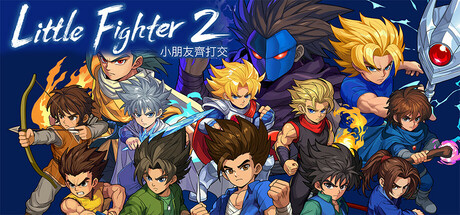
The developers describe how their game uses AI Generated Content like this: AI was used in the creation of certain visual assets, including character avatars, title screen artwork, promotional materials, and background art. However, these assets still required substantial manual work such as design, sketching, outline drawing, and polishing. The AI was used primarily as a tool for coloring and enhancement, and it did not dictate the creative direction. The visual style remains faithful to the original Little Fighter 2. Some people assume that because AI was used in certain artwork, it must have been applied throughout the entire project. That is far from the truth. I used AI primarily for large-scale visual tasks. To give a clearer picture: the game includes over 3,000 hand-crafted sprite frames, composed from thousands of hand-drawn body parts. In contrast, only about 100 images were AI-assisted, and many of those, such as promotional artwork, don't even appear in the actual game. I understand that some people may have concerns about the use of AI in the creative process. But I hope people can see the broader context and appreciate the amount of manual effort that went into making

The developers describe how their game uses AI Generated Content like this: Background images, one character illustration, and background music were created using AI.

The developers describe how their game uses AI Generated Content like this: Images have been generated for marketing , steam community items, storepage and in game menu images. Voice has also been generated

The developers describe how their game uses AI Generated Content like this: We will use AI-generated marketing images for our promotional pictures. The usage locations will include the main promotional image, vertical promotional image, library promotional image, library profile image, and library home page image on the store page. The original materials are self-created and will be processed by AI for later use. There are no AI elements or AI-created content within the game.

The developers describe how their game uses AI Generated Content like this: Generative AI tools were used during development to assist with programming, bug fixes, and the creation of some in-game icons. However, the main characters, most of the skill/equipment icons, backgrounds, and world map illustrations were hand-drawn by my daughter, who was 13 years old at the time.

The developers describe how their game uses AI Generated Content like this: Because there are so many characters in the game, we used AI art (based on our own art style) to create a few characters towards the end of the game.

The developers describe how their game uses AI Generated Content like this: For now, AI/computer-generated audio is utilized for the limited express automated announcements

The developers describe how their game uses AI Generated Content like this: Some 2D graphics on store page

The developers describe how their game uses AI Generated Content like this: Initial concept art was generated using AI tools, followed by manual adjustments and modifications by artists. The final artwork combines AI-generated base designs with human-made artistic revisions.

The developers describe how their game uses AI Generated Content like this: We used AI to create the capsules for the game's store page. We used AI to translate the game into other languages.

The developers describe how their game uses AI Generated Content like this: Some of the card picture is hand-painted based on AI generated results

The developers describe how their game uses AI Generated Content like this: Only AI tools were used to complete part of the Traditional Chinese and English localization. All text was manually reviewed and proofread.

The developers describe how their game uses AI Generated Content like this: Some of the backgrounds are created using AI and manual refinement.

The developers describe how their game uses AI Generated Content like this: The game uses voice acting and music generated using AI

The developers describe how their game uses AI Generated Content like this: This game features fully voiced, AI-powered conversations and performances created in collaboration with an actor, with select visual elements created by our team with the help of AI tools.

The developers describe how their game uses AI Generated Content like this: Music: AI was used to generate the initial tracks, but every song was then heavily edited, rearranged, and mastered by a human. Nothing went straight from the algorithm to your headphones.

The developers describe how their game uses AI Generated Content like this: South Scrimshaw Part One uses voiced narration synthesized from public domain recordings.

The developers describe how their game uses AI Generated Content like this: Steam achievements may contain pictures that was generated by AI

The developers describe how their game uses AI Generated Content like this: This game is the handcrafted work of a solo indie developer and artist. During the development process, generative tools were used as supportive instruments within the creative workflow for specific assets. The final game experience fully reflects the developer’s original creative vision and craftsmanship.

The developers describe how their game uses AI Generated Content like this: The original 2024 version of the game was made entirely by hand, but since Beta 1.2 (October 2026) I’ve been using AI tools - some updates may include models made with AI assistance (e.g. the pumpkins and grave candles in the Hallows Event). Models from the original version such as the coins, board, characters, weapons etc. were made by hand, but they’re so simple anyway that they probably don’t have much artistic value - when I prompt AI for a new model I try to keep it in the same minimalist style as if I were clicking it together manually using primitives in Unity.

The developers describe how their game uses AI Generated Content like this: We do not use generative AI in the game. For community-requested languages that are not officially supported, we use DeepL to assist with localization, with the help of community members who review and improve the translations.

The developers describe how their game uses AI Generated Content like this: FACEMINER is a concept-driven game that directly engages with the ethics of AI. For thematic purposes, the game features faces which have been generated by a GAN (Generative Adversarial Network) trained on the FFHQ dataset, a research dataset released by NVIDIA that is the backbone of many real-world facial recognition applications. Per NVIDIA, only images under permissive licenses were collected. The 'AI training' in this game is fictional and has been simulated for entertainment purposes. The game can be interpreted as a critique of AI specifically relating to the ecological impact of mass data hoarding, surveillance concerns, and way it is used to compound corporate power.

The developers describe how their game uses AI Generated Content like this: We use AI to localize the main game interface and texts

The developers describe how their game uses AI Generated Content like this: AI tools were used in the production of the voice acting. We are a five-person team that has been working on this project for several years without the budget of a large studio. In our case, this was a practical solution that allowed us to complete the game at the level of quality we were aiming for. All creative decisions and the final shape of the game were made by our team. AI was used as a supporting production tool, not as a replacement for the creative work behind the game.

The developers describe how their game uses AI Generated Content like this: Our team uses generative AI tools to help develop some in game assets.